History
The Barefield House
Built in Apalachicola in 1907. A convent and a school for about fifty years after that. In 1974 a family of oystermen bought it rather than watch it be demolished, jacked it up and hauled it eleven miles west.
Sources are Abandoned Florida, Southern Living, and the City of Apalachicola’s historical record. Each entry says where it came from. Where accounts differ, we say so.
- 1907
Avenue K and Seventh Street
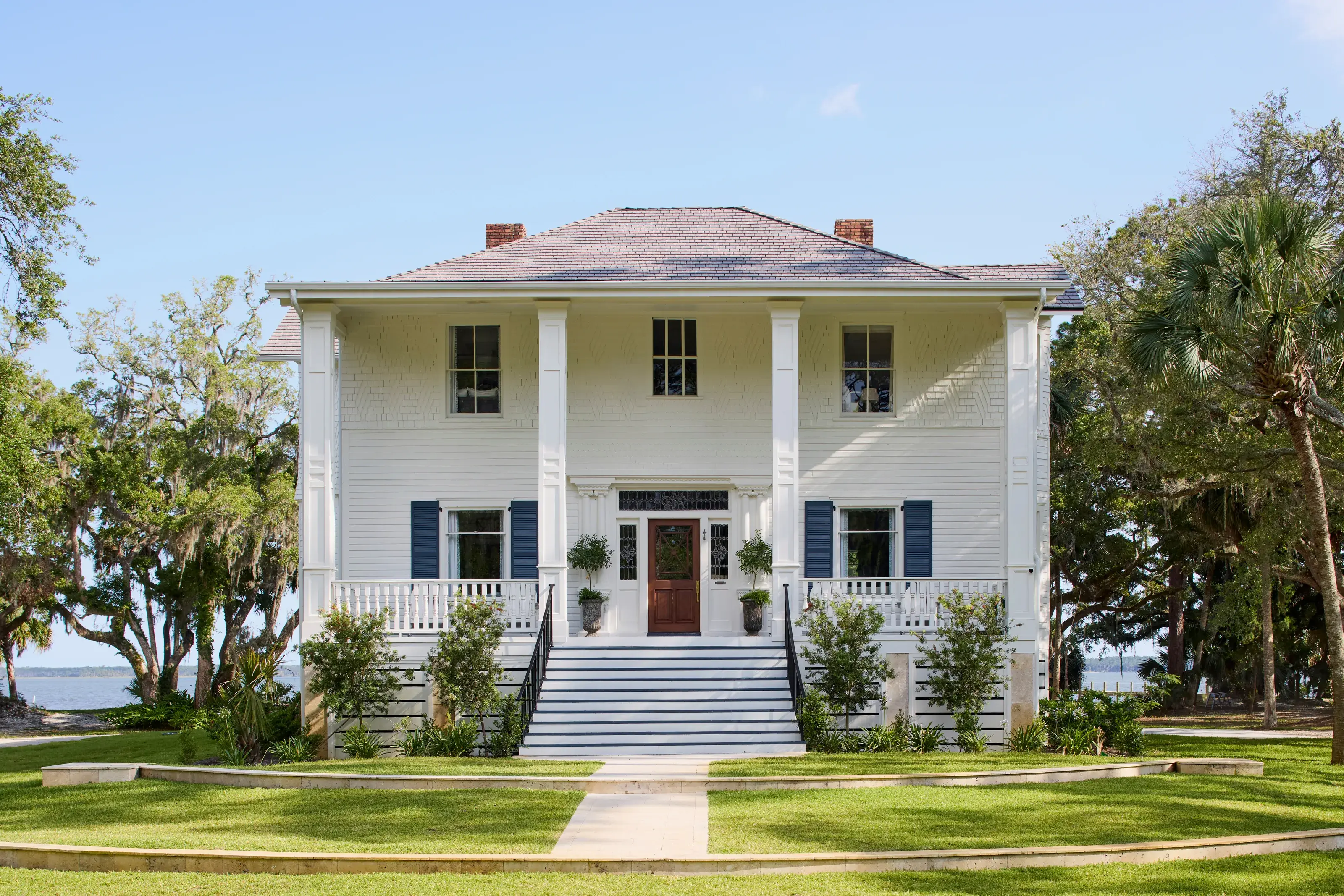
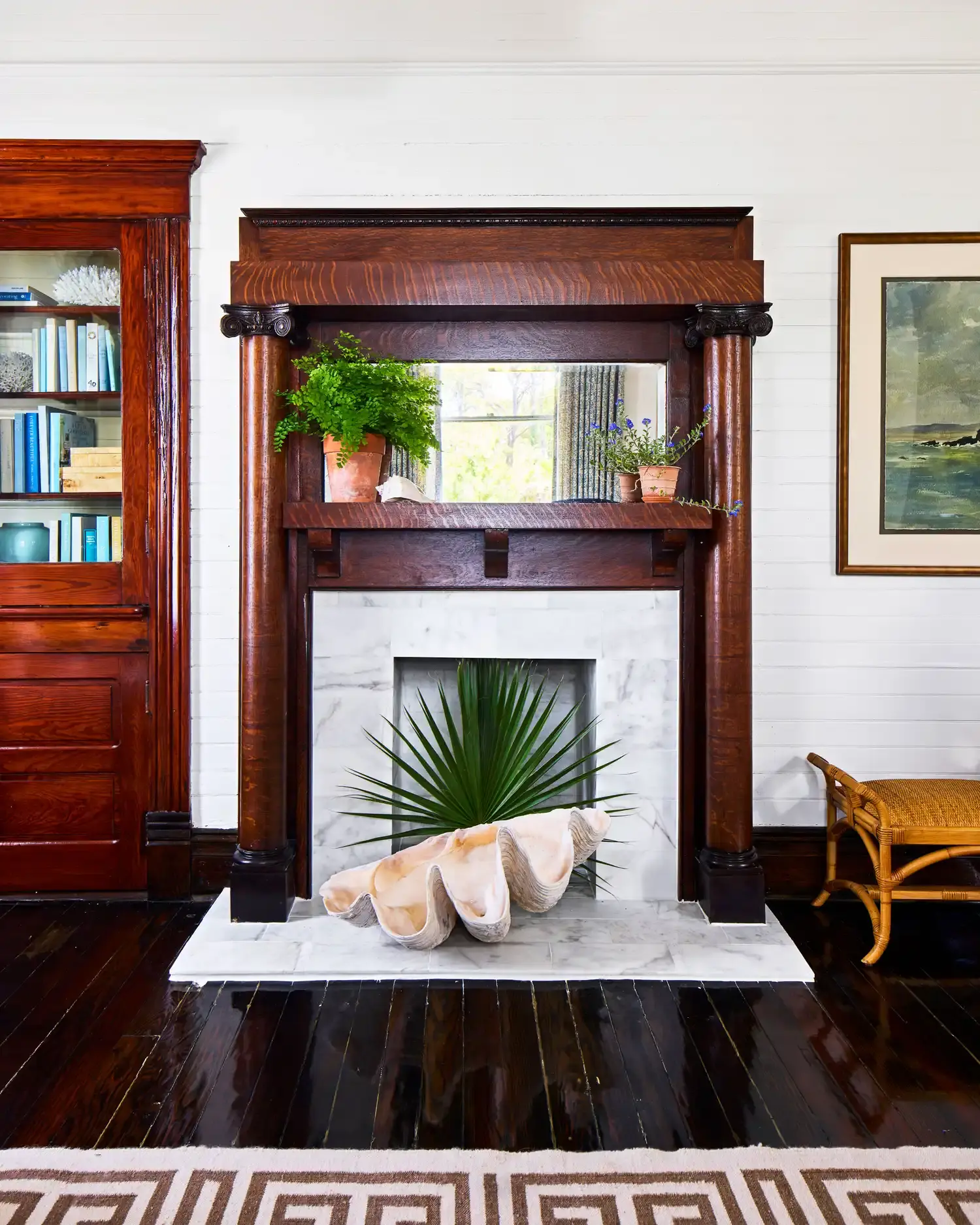
Charles Dobson, a lumberman, built a fourteen-room house on the corner of Avenue K and Seventh Street in Apalachicola. It was two stories of heart pine and cypress, with high ceilings, eight fireplaces with carved mantels and handmade tile, imported floor tile, stained glass, and porches on both levels.
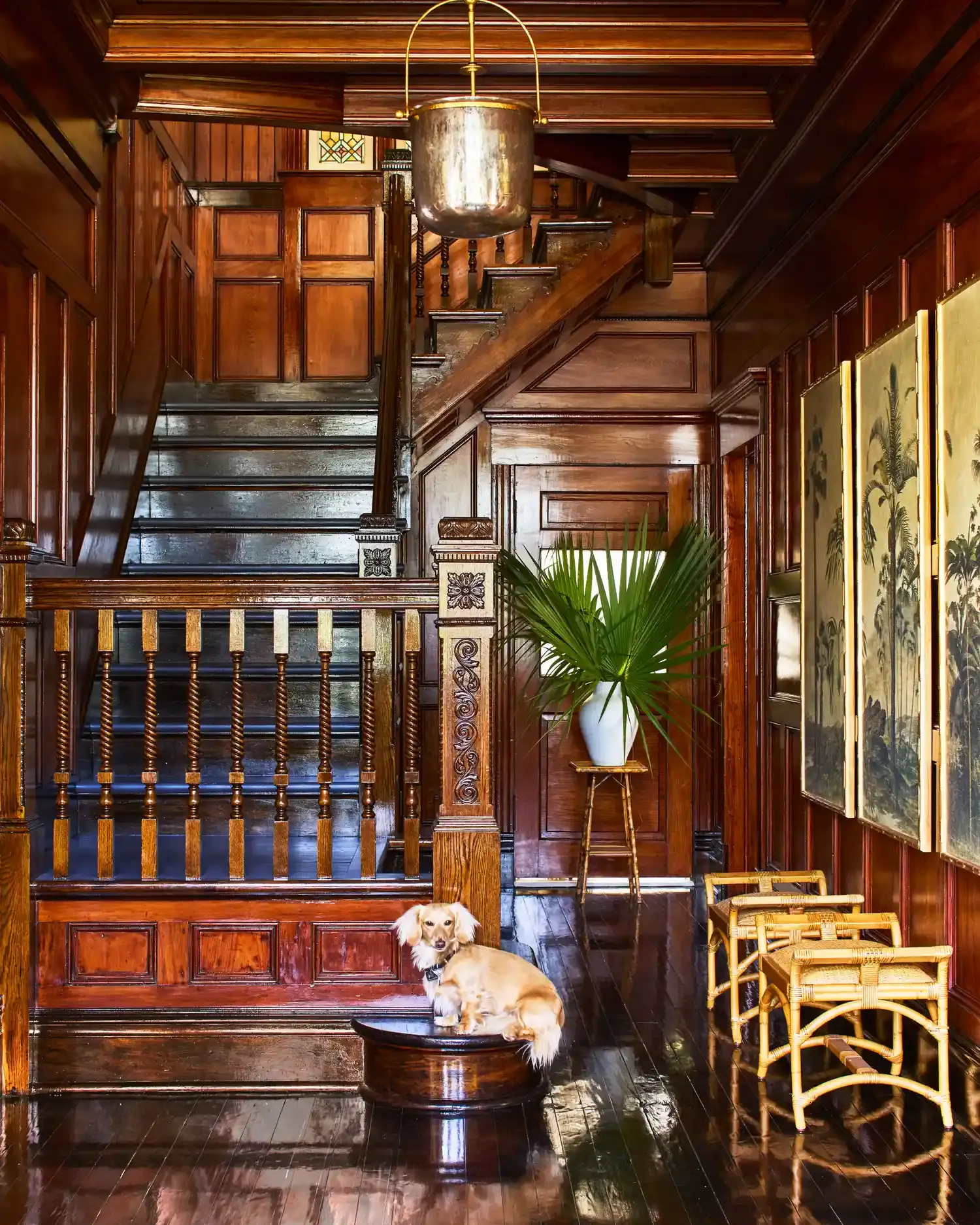
The millwork was cut by Apalachicola shipbuilders, who spent the rest of their working lives making boats. It remains the most striking thing about the house. Dobson built it for Minnie Barefield.
Source — Abandoned Florida; Old House Dreams
- 1907–1917
Minnie Barefield
Minnie Barefield ran a brothel in Apalachicola, and she lived in this house from the year it was built until her death in 1917. It was built to her specification.
Her name is the one that lasted. More than a century later, and eleven miles from where she lived, the building is still called the Barefield House. We have not changed it.
A note on the record. Some accounts describe Minnie Barefield as Dobson’s mistress. We have not repeated that, because the surviving record of her life is thin and second-hand.
Source — Abandoned Florida; City of Apalachicola Black History Trail
- c. 1920s–1970s
The Sisters of the Holy Family
The house passed to the Sisters of the Holy Family, the New Orleans religious order founded by Henriette Delille in 1842.
For roughly fifty years it was a convent, and a school. A good many people in this town were taught in these rooms.
Source — Abandoned Florida; City of Apalachicola Black History Trail
- 1974
The move west
Father Hugh Dolan sold the house to Ruth and Eldon Schoelles, from one of the oldest oystering families on this coast. The neighborhood around it was changing and the building was in the way.
Rather than let it be demolished, they moved it. The whole structure was jacked up and hauled eleven miles west of town to a wooded tract above St. Vincent Sound. The road it traveled is where the name comes from.
A note on the record. The 165-ton weight and the three-day duration are widely reported, but come from secondary accounts. They are given here as reported rather than as measured fact.
Source — Abandoned Florida; Southern Living, May 2026
- 2018
Hurricane Michael
Michael came ashore as a Category 5 and took much of the Panhandle apart. The house stood, but water got into it and stayed.
It sat empty long enough to be found and cataloged by the people who document abandoned buildings in Florida. Their photographs show peeling paint and water damage, and underneath all of it, woodwork that had not moved in a century.
Source — Abandoned Florida; Southern Living, May 2026
- 2022–2024
The restoration
A buyer came across the house on Abandoned Florida — in the photographs of it at its worst — and drove out to see it in person. The owner, oysterman Kendall Schoelles, showed her around himself.
The work ran to 2024. Every wall and room layout stayed where it was. The kitchen and bathrooms were taken back to the studs and rebuilt, and local craftspeople refinished the floors, the cypress wainscot, the corbels and balusters, and the handmade fireplace tile, some of which is set with small scallop shells. Florida code required that the house be raised. Air conditioning, wired-in light fixtures and an elevator went in at the same time.
The interiors are by Jacksonville designer Nellie Howard Ossi, who drew the palette — sage and celery, deep cobalt, pale sky blue — from what is outside the windows.
Source — Southern Living, May 2026
- Today
11 MILE
The house now takes one group at a time, for the length of their stay.
Kendall Schoelles still launches his boat from the dock to work his oyster beds, and still comes up to the house for coffee.
Source — Southern Living, May 2026
Before 11 MILE
The years it stood empty
Between Hurricane Michael and the restoration, the house was photographed at length by Abandoned Florida, who document neglected buildings across the state. Theirs is the only public record of what the house looked like in those years, and it is the reason Megan McGill knew the house existed at all.
Their photographs are their own and are not reproduced here.
See the house as it was at Abandoned Florida (opens in a new tab)
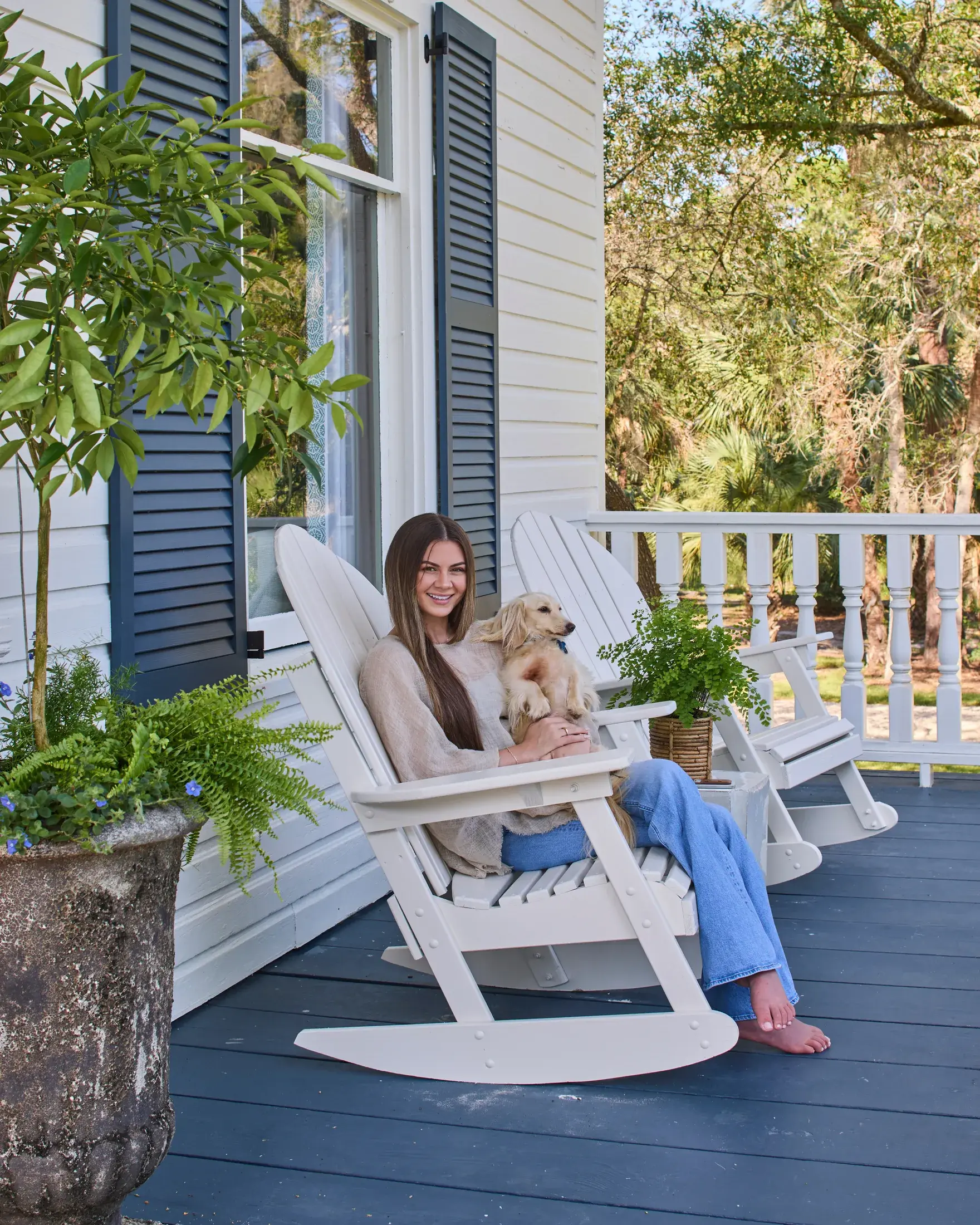
The buyer
Megan McGill
She saw the Abandoned Florida photographs and drove out anyway. Two years of work followed, and the decision that mattered was made early: restore it, do not remodel it.
Everything else followed from that. The kitchen and bathrooms are new inside the old rooms. The floors, the wainscot, the corbels and the fireplace tile are the originals, refinished.
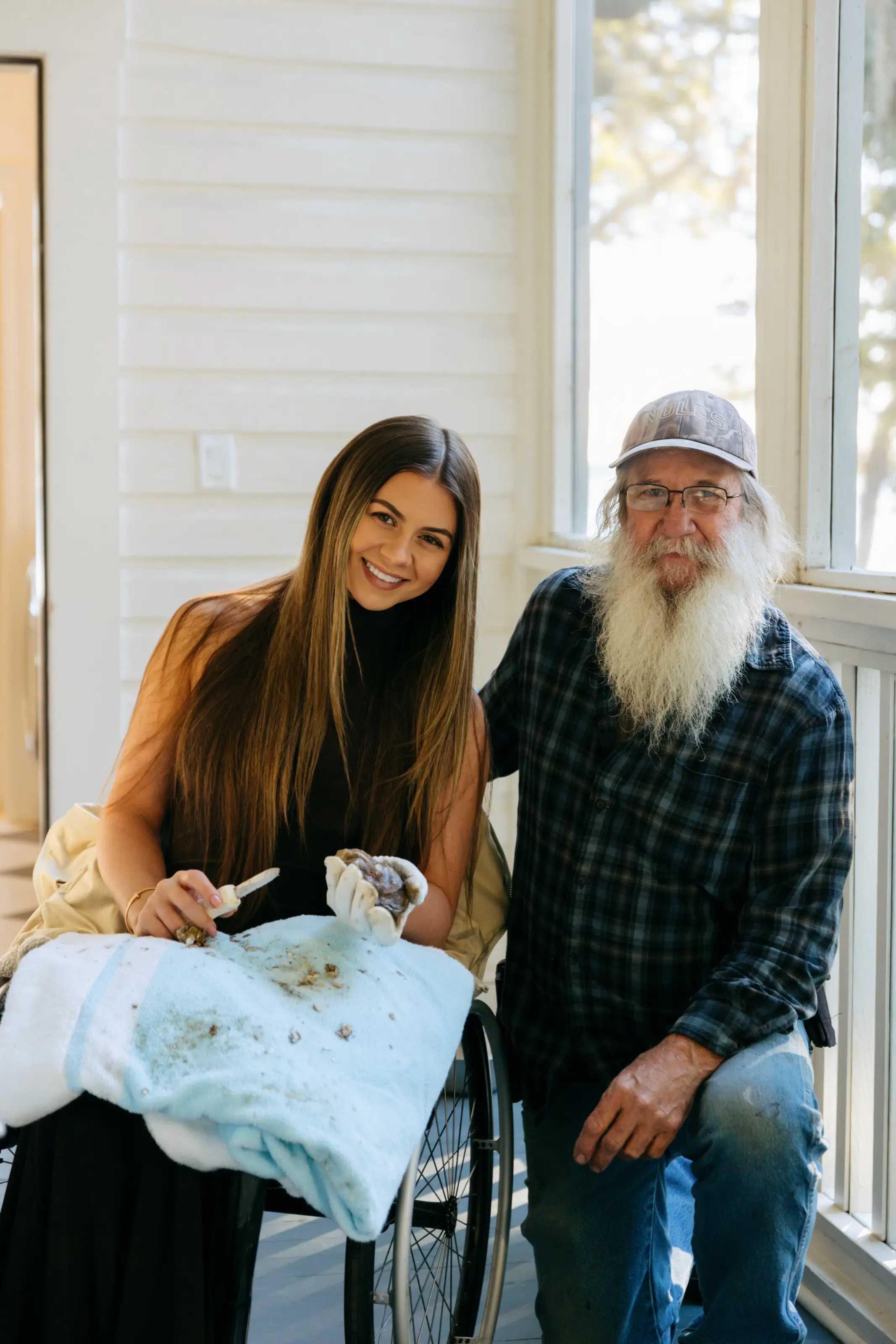
Kendall Schoelles
Still here
Kendall Schoelles grew up in this house after his family hauled it out of town in 1974. He sold it to the person who restored it on the understanding that she would not gut it.
If you are here for a week you will probably meet him. He is usually the one shucking the oysters.